Showing posts with label development policy. Show all posts

Saturday, June 18, 2022

A post-pandemic primer on the Philippines


 I recently "sat down" with Cecile from Toronto, the host of a Youtube channel known as CeCe Tee Vee and "The Closet Economist" a former official of the Bangko Sentral who is completing her doctoral studies in Barcelona. 

We discussed the state of the world following Covid-19 and the complex challenges facing the nation as it seeks to rebound from its ill effects. We assessed the capacity of the incoming government of Ferdinand Bongbong Marcos, Jr to address it, and the missed opportunity of electing Isko Moreno whose human-centered economic plans were aimed squarely at our complex challenges.

We concluded with reflections on how to promote transformational thinking and keep the flame of the Iskommunity alive.

This episode streamed live on Philippine Independence Day June 12, 2022. The language spoken is mainly Taglish (a combination of English and Tagalog).

Thursday, January 9, 2014

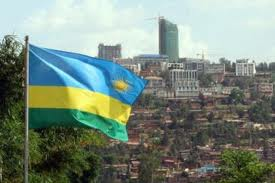
Lessons from Rwanda

Twenty years on since the Rwandan genocide how has the country transitioned into a more stable society and been able to punch above its weight in good governance and growth?


Landlocked, under-endowed, war-ravaged, Rwanda a nation of 10.5 million people has faced a number of disadvantages, not the least of which was the ethnic strife between the Hutus and Tutsis that has ravaged the country in the past. And yet it in spite of these setbacks, it has experienced very respectable growth figures (averaging 7.4 per cent per annum) and improving social indicators over the past decade.

Rwanda has undertaken significant efforts to reform its regulatory environment. Just consider the following:

  • The World Bank ranks Rwanda the 4th best country in Africa to do business, after Mauritius, South Africa and Botswana.
  • It only takes 3 days to set up a business, the 8th shortest time in the world.
  • The country is in the 71 percentile rank with a score of 53/100 in Transparency International’s Corruption Perception Index, placing it in the same class as Malaysia and South Korea.

So how has a country which suffered many years of war and as much corruption as any other impoverished nation, managed to turn things around?

Well the short answer is they did this through an accommodative political settlement and the help of both conventional and unorthodox institutions and economic strategies.

Rwanda has had a long history of ethnic violence between the two main rival tribes.  From pre-colonial times up to 1959, the pastoralist Tutsis were the ascendant political class over the agriculturalist Hutus. Ethnic differences were exaggerated under colonial rule. In the lead up to independence in 1962, Belgian colonists transferred their support to Hutu elites. This led to mass killings of Tutsis many of whom fled the country.

Two Hutu regimes ruled the country from 1961-94. Having a single-party dominate politics for most of this period did not prevent the nation from succumbing to decentralised rent-seeking and clientelist behaviour. A group known as Akazu was at the apex of this system. It was related to but not controlled by the administration.

Tutsis sought to regain control of the country through an invading Rwanda Patriotic Army. This culminated in the genocide of 1994 by retreating Hutus. After consolidating their hold on the country, the Rwanda Patriotic Front (RPF) established a government of national unity incorporating moderate Hutus, one of whom led the country as its president.

Although a certain amount of political repression in the guise of preventing a return of “ethnic ideology” has occurred, the coalition governments comprised of all legal parties in parliament being proportionately represented in cabinet (the ruling RPF holds no more than fifty per cent of the portfolios) has succeeded in keeping the nation stable. This inclusiveness along with its program of restorative justice known as gacaca has fostered reconciliation and allowed the country to experience improvements in social and human development not seen previously.

The intrusive intervention of government in everyday life at times borders on social engineering as the government has sought to follow the Singaporean model in both economic and social policy implementation. President Paul Kagame (elected in 2003 and then again in 2010) has been labelled the global elite’s favourite strongman for improvements to public service delivery, particularly in health and education.

Departmental line agencies have been managed through an institution of performance contracts known as imhigo which Tim Kelsall describes as “modern performance agreements supported by a significant component of moral pressure and neo-traditional gloss.” This combination of formal scientific management theory and homegrown practices has permeated down to the grassroots by roping in local officials and civil servants.

On the economic front, Rwanda has applied a hybrid approach to investment promotion. On the one hand, it has adopted policies and institutional arrangements considered best practice by the World Bank’s Doing Business surveys. Responsibility for managing this has been assigned to the Rwanda Development Board (RDB). But this works in parallel with a more activist approach in industrial policy with the RPF’s holding company, Tri-Star Investments getting involved in joint ventures and start-up companies.

Tri-Star helped the RPF raise funds during the Congo wars to overthrow Zairean dictator Mobutu Sese Seko through trading metals in international markets. The surplus achieved was then channeled towards domestic private sector development. The holding company has initiated many successful ventures with demonstration effects for the rest of the economy. Telecoms is one example. When Tri-Star sold part of its stake in Rwandatel in 2007, it got five to ten times its initial investment in the company.

Because profits from Tri-Star that are not ploughed back into its businesses revert to RPF, the party is financially independent. It uses this to fund its political campaigns without having to resort to political donors. Kelsall explains what this does:

The RPF’s financial solvency obviates the need for party officials to engage in election-related corruption, which in turn allows the party to take a very tough line on corruption among its leading supporters and in the bureaucracy.

Apart from Tri-Star the government has also orchestrated the formation of other funds, the Horizon Group belonging to the army, which undertakes socio-economic projects to produce productive enterprises, and the Rwanda Investment Group, a consortium led by domestic and diasporic elite.

The purpose of the second group is to raise capital other than through foreign borrowings to invest in projects of strategic national importance. Without such an interventionist approach, much of the agricultural and industrial transformations currently underway in different sectors of the economy simply would not be happening.

The case of Rwanda demonstrates many similar traits to that of the Northeast Asian developmental states. The RPF led government faced existential threats from the opposition in exile and from a potentially hostile ethnic majority at home just as the South Korean and Taiwanese states did from North Korea and from mainland China.

These threats have kept the ruling RPF focused on improving social and economic well-being for its citizens to maintain its legitimacy and hold on power. The regime has exercised a capacity for long-range vision and forward planning contained in its Vision 2020 roadmap, free from the influence of rent-seeking, private interests. It has ruthlessly pursued its policies at times through heavy-handed regulations and enforcement of rules.

The low crime, low corruption, low red-tape environment this has fostered was not enough. The RPF has used its clout to address market failures and encourage the adoption of productivity enhancing new technology. Through its holding company and other private-led investment groups that it has brought into being, jobs have been found for talented managers and skilled workers that might have otherwise gone overseas.

The Rwandan experience demonstrates the capacity of poor nations to bring about a system of governance that is relatively competent and free from corruption within a short span of time using home-grown institutions, resources and talent. The extremely harsh and disadvantageous position it faced did not become a hindrance, but rather provided greater incentive for it to go down the road it has followed. Surely, any emerging economy seeking to do the same should take heed the lessons from Rwanda.

Friday, April 29, 2011

Of Wedding Feasts and Famines

In the media-driven frenzy of royal-watching, the wedding between Kate and Wills harks back to a time when the pomp and pageantry of the monarchy provided a diversion from the daily struggles of their subjects. In England, as late as the 1930s, poor families struggled with the problem of hunger. Yet as George Orwell wrote, 
The basis of their diet, therefore, is white bread and margarine, corned beef, sugared tea and potatoes -- an appalling diet. Would it not be better if they spent more money on wholesome things like oranges and wholemeal bread or if they even, like the writer of the letter to the New Statesman, saved on fuel and ate their carrots raw? Yes, it would, but the point is that no ordinary human being is ever going to do such a thing. The ordinary human being would sooner starve than live on brown bread and raw carrots.
The May/June 2011 online version of the magazine Foreign Policy is devoted to the problems associated with food price inflation and the impact this would have on poverty and hunger. The development aid community has flagged this as a potential cause for dragging many in the middle to low income countries into poverty.

Calls have been issued to address this pressing problem. But in a piece written by Abhijit Banerjee and Esther Duflo, the general consensus regarding the issue is challenged. What if the experts are wrong, they ask.What if the problem of hunger is not caused by the lack of affordable food? Nobel Prize winning economist Amartya Sen has famously pointed to the fact that famines have only occurred in recent times in countries that lacked democratic institutions of accountability. Poor governance rather than a lack of food supply creates extreme hunger.

In India where Sen is from, despite the rise in per capita income, per capita caloric intake has declined. The piece points out that
(t)he change is not driven by declining incomes; by all accounts, Indians are making more money than ever before. Nor is it because of rising food prices -- between the early 1980s and 2005, food prices declined relative to the prices of other things, both in rural and urban India. Although food prices have increased again since 2005, Indians began eating less precisely when the price of food was going down.
What if the problem of hunger is not driven by a lack of affordable food, but the fact that the poor demand a different variety of food? They use one example to bear this out:
Using price data from the Philippines, we calculated the cost of the cheapest diet sufficient to give 2,400 calories. It would cost only about 21 cents a day, very affordable even for the very poor (the worldwide poverty line is set at roughly a dollar per day). The catch is, it would involve eating only bananas and eggs, something no one would like to do day in, day out. But so long as people are prepared to eat bananas and eggs when they need to, we should find very few people stuck in poverty because they do not get enough to eat.
To provide more evidence of this, they cite a study conducted in two regions of China where researchers offered randomly selected poor households a large subsidy on the price of basic staples believing this would result in greater consumption of food. Instead they found that:
(o)verall, the caloric intake of those who received the subsidy did not increase (and may even have decreased), despite the fact that their purchasing power had increased. Nor did the nutritional content improve in any other sense. The likely reason is that because the rice and wheat noodles were cheap but not particularly tasty, feeling richer might actually have made them consume less of those staples. 
They go on to point out the possible reasons why the poor might be eating less. Better water and sanitation for instance may lead to a lower incidence of nutrition depleting diseases. Women in rural villages which now have access to water no longer need to spend a good deal of effort fetching water to and from rivers. Aside from that is the penchant of the poor to spend on non-essentials like vices and other forms of entertainment (televisions, DVDs, mobile phones, movies, etc).

Many programs aimed at boosting protein and iodized salt intake have been met with a dismal response from poor households. It seems that when it comes to deciding what to spend their income on, they seem to have other priorities.

Tuesday, August 24, 2010

East Asia and LatAm


Image taken from Web Resources Depot.

New graphic tools tell the oft-repeated story behind these two regions in a visually compelling format.

Lately I have been playing around with the online graphing tools of the Legatum Institute; in particular, I have been using the results of the 2009 Prosperity Index which the Institute publishes to compare East Asia and Latin America. This multi-dimensional index is an aggregator of sorts in that it combines various measures of prosperity and well-being and allows users to plot different countries on a “spider web” chart.

It is a well-known fact that East Asian and Latin American countries share many socio-cultural traits as well as development strategies. This is borne out by the Institute’s results for these regions. As shown here, LatAm seems to converge into one distinct pattern, while East Asia does the same here. Note that for purposes of demonstration, I have lumped the Philippines (a Latin country transplanted in Asia) and Chile (the reverse case) with their affinitive counterparts.

The patterns show different models of development. LatAm nations score high on Personal Freedom and Democratic Institutions, but relatively low when it comes to Economic Fundamentals, Entrepreneurship and Innovation, and Social Capital. Despite this, the most well-off nations of Argentina, Uruguay and Costa Rica seem to do well in terms of some social indicators Education, Health, and Safety and Security. There is a general lack of good performance in Governance save for the richer nations.

The opposite seems to be happening with East Asia. Here Personal Freedom seems to have been less prioritized in favor of Economic Fundamentals, Entrepreneurship and Innovation, Health, Education, and Safety and Security. As countries in the region get richer, a gradual improvement in Personal Freedom and Democratic Institutions takes place as evidenced by Japan, South Korea, and Hong Kong. Governance tends to improve as well (with China in the embryonic stage of this development path).

Does this imply that democratic institutions are not good for development or that authoritarian governments promote growth? Not necessarily as this Economics By Invitation feature by The Economist showed. While as Alberto Alesina states, there may be no evidence that democracies promote faster growth, and that as Lant Pritchett suggests authoritarian regimes tend to have a spotty record, as Daron Acemoglu who co-wrote a book on this (shown below) as well as Ricardo Hausmann, Arvind Subramaniam, and Yang Yao suggest, getting the right incentives, institutions and governance arrangements do matter.


Tuesday, July 6, 2010

Population and Development

There is an ongoing debate raging at the moment over population policy in the developing world, particularly in Catholic countries like the Philippines. There is growing opposition in the said country towards the introduction of sex education in public schools and the provision of family planning services through the public health system. Below are a few charts that should put the debate into perspective.

The first chart represents comparative statistics of average incomes between the Philippines and its neighbor Thailand (predominantly Buddhist) over nearly fifty years from 1960 up to 2008. Both nations began with relatively the same levels of income in 1960 with the Philippines enjoying a slight advantage, but by 2008, incomes in Thailand were more than double that of the Philippines. What could account for this divergence? 


The second chart shows the population growth rates of both countries over the same period. The two nations had nearly identical growth rates of 3% in the early '60s. Their growth rates then began to diverge with Thailand rapidly decelerating to 0.6 of a percent in 1998. The Philippine population growth rate was also declining, but at a slower rate. Only in 2000 was it able to drop to 2% which Thailand had already breached back in 1985.


One might argue that the direction of causality is not fully established. Higher income countries by and large tend to have lower birth rates not vice versa (although recently, that argument has itself collapsed, as I highlighted in this previous blog entry). At least in this instance, one can clearly see that the slowing of the population boom in Thailand preceded its economic expansion.

Other variables might also have intervened such as industrial policies for instance, or different financial and political conditions; but, by and large, one can argue the case that had the Philippines followed the same population policy as its neighbor, it might have grown just as rapidly and reduced the incidence of poverty as a consequence. Taken in this light, one might frame the debate over sex education and family planning more meaningfully.

Thursday, June 24, 2010

The Development Trap

In his weekly column Cielito Habito has been following the jobless growth phenomenon that plagues a number of developing states like the Philippines. This was evident in the first quarter figures for 2010 which showed that just as the economy expanded by 7.3%, unemployment rose by 300 thousand. The country's growth did not translate into a lower unemployment rate. Habito rhetorically poses the question
Where did the impressive first-quarter growth come from? (...M)oslty from petroleum refining, electronics and processed food (...P)etroleum refining is (...) an industry not particularly known to be job-rich (...) Electronics (...) is an industry with almost zero linkages elsewhere in the economy. 
(...) The message is clear: We need economic growth that widely involves and benefits more industries, more geographical areas and more sectors of society—not the narrow, shallow and hollow growth ... in recent years (emphasis added).
This paints the picture of a dual economy where growth and opportunity are restricted to a few enclaves to the exclusion of the vast majority of participants. In recent years, the Philippine macro economy has been on solid footing. Just as some beleaguered European nations were applying for IMF assistance, the Philippines was exiting from its supervision after a thorough process of market liberalization, privatization and deregulation.

Having finally weened itself off the assistance of the DC-based institution, the country can now begin to chart its own development path without the policy impositions of the Washington Consensus. One silver lining  from the recent North Atlantic crisis according to Robert Wade is the opportunity to re-examine strategies for promoting industrial development, a recognition that other paths, for instance the BeST consensus (from Beijing, Seoul and Tokyo), are equally if not more viable. He explains that
(o)n the face of it, raising the state's capacity to coordinate a selected set of economic agents is a more feasible task than across-the-board formalization and enforcement of the rules - a task which requires high fixed costs and many decades, and which often provokes fierce resistance, especially from those already in the elite.
(...) Concrete manifestations of this kind of institutionalized coordination include Japan's MITI, Taiwan's Economic Planning Council and its Industrial Development Bureau, South Korea's Economic Planning Board, Singapore's Economic Development Board; and also numerous industry associations.
In contrast to "developmental state" forged by its East Asian neighbors, the Philippine state in its post-independence, pre-martial law incarnation was corrupted from the bottom-up as
the big landed families (...) used personalized rules of the game to obtain political protection in order to oppose industrial transformation, and used corruption to protect their existing sources of rents.
(...D)emocratization has somewhat restrained a state which under Marcos plundered from the top down, and has moved the nation a little way in the direction of a joint state-business project of a developmental state.
A typical developmental state would not score highly against the World Bank governance indicators based on the experience of East Asia. This is because in a bid to foster more inclusionary growth, state officials may have to actively steer the value stream of investors who might otherwise not source from local firms. This might require gentle nudging and incentives to begin with to strong arm tactics to get their message across as in the case of Taiwan, where
(t)he Industrial Development Bureau (IDB) officials in charge of ... specialised glass considered that at least two Taiwan glass makers could meet the price and quality of the glass imported by the Philips TV factory if given a long-term supply contract and some technical help.
(...) Philips (...) refused to consider the idea, saying it was happy with its existing arrangement to import from a Philips factory elsewhere. But then Philips began to experience delays in authorization to import the glass, which previously had been granted without delay. Philips protested. The delays lengthened. The IDB officials reminded Philips of the advantages of switching to domestic suppliers ... eventually Philips got the message, entered into a long-term supply contract with a domestic producer and in so doing built up goodwill in the IDB.
This example demonstrates that while generous tax concessions and free trade areas might foster foreign direct investments in specific industry sectors, they do not inevitably lead to greater industrial diversification. Pro-active and sometimes robust engagement with industry is required in order to accomplish that.

Among the organizational features of a developmental state observed by Wade are the targeted improvement of state agencies in charge of industrial policy, the fostering of a public service mindset among its officials, the bifurcation of political patronage channels and economic bureaucracy so that the former do not affect the latter and an industrial extension service with tight limits on the use of discretionary resources.

With the weak fiscal position awaiting the incoming government of Benigno Aquino, the immediate task of shoring up the budget situation is imperative. But in order to simultaneously pursue his vision of good governance and the rule of law, a more targeted approach than would otherwise be recommended by the good governance (GG) adherents of the Washington Consensus is required. One which would make more judicious use of limited public resources in building up state capacity towards more inclusive development.

Saturday, January 16, 2010

Nevermind the BRICs, Here Come the MAVINS

What does being an emerging market mean? The definition seems amorphous. When Jim O'Neill coined the term BRICs back in 2001, he had in mind demographic and financial blocs in developing or transitional economies that were vast and growing. This definition was relaxed to include countries that had "caught up" with advanced economies such as South Korea and Gulf Cooperation Council members.

As the Great Recession turns into the Great Recovery, the converging economies seem to be compensating for the somewhat stagnant growth experienced by most of the developed world. Market analysts at Bloomberg have now coined a new term, MAVINS, referring to Mexico, Australia, Vietnam, Indonesia, Nigeria and South Africa. These six countries are going to be the BRICs of the new decade.

For policy analysts, the question posed by these forecasts is, how durable are these growth narratives? Recently a prominent shortselling market analyst predicted the imminent bursting of the asset bubble in China. It seems that China could repeat the post-dot com folly of the US Federal Reserve in easing monetary policy too long. It was reported this week that China was unwinding much of its stimulus to avoid such a tragedy, but doubts continue to linger.

More fundamental is the question regarding how suitable the institutional frameworks are for some of these emerging economies. China and Vietnam have taken a similar path to development that most of East Asia took from the 1950s to the 70s - a path different from the Anglo-American model built on the institutional building blocs of property rights, rule of law and democratisation.

Some have argued that to take such a quantum leap in such a short span of time (as opposed to centuries which is how long it took in the West) required experimentation using different tools. The impoverished countries of the East could not afford to enforce a system of property rights and the rule of law to foster impersonal contracting, the basis for market-based transactions, so they instead relied on more paternalistic (read: authoritarian) forms of development, i.e. the Development State. Here is a video stating this argument.


This development strategy only takes these countries so far, so the counter argument goes. Unless these emerging economies, China and Vietnam, adopt reforms in their courts and legal system to strengthen contract and property rights, their growth will eventually slow.

So far, it does not seem like the Communist leaders in either country have signalled any intention to go down that path, so I suppose the theory of sustained growth contingent on second stage reforms posited above will be tested soon.

Wednesday, July 15, 2009

Hu is afraid of the big bad state police?

In the World Bank’s annual Doing Business Survey, the People’s Republic of China is regularly ranked in the middle of table. For 2009, it was ranked 83rd overall out of 181 countries in terms of the ease of doing business. It is immediately preceded by Trinidad and Tobago, Panama and Kenya, and ranked right below it are Grenada, Belarus and Albania.

The rest of the so called BRIC economies do not fair any better with the Russian Federation at 120th, India at 122nd, and Brazil at 125th place. The rankings in the survey are determined by a set of criteria including the ease of starting a business, getting construction permits, ease of hiring, enforcing contracts, protecting investors, securing credit, paying taxes, trading across borders and the ease of closing down a business.

In economic studies, these rankings are often used as “proxy” indicators for institutional quality. Dani Rodrik has for years controversially raised the point that the rapid growth of countries like China provides evidence that poor institutional quality aka corruption is not necessarily a roadblock to development.

Enter Rio Tinto executive Stern Hu. What impact, if any, will his being incarcerrated for allegedly bribing officials and in the process stealing “state secrets” have for the future of doing business in China?

Thursday, May 21, 2009

Humans v Rats v Monkeys

This is a case of how “heuristic bias” in humans (a preference for rules of thumb in decision-making) and hubris proved to be their undoing when pitted against rats and monkeys in two experiments. The lessons drawn have implications for anyone engaged in economic development and industrial policy.
Prominent development economist Bill Easterly was not joking when he recently blogged that “rats outperform humans in interpreting data.” He was referring to the experiment recounted in Leonard Mlodinow book The Drunkard’s Walk in which rats and humans were pitted against each other and made to draw green and red balls at random. With probabilities rigged in favour of greens, they were made to predict the colour of the balls drawn after observing the process.

Surprisingly, the rats came out on top:
The rats followed the optimal strategy of always predicting green (I am a little unclear how the rats communicated, but never mind). But the human subjects did not always predict green, they usually want to do better and predict when red will come up too, engaging in reasoning like “after three straight greens, we are due for a red.” As Mlodinow says, “humans usually try to guess the pattern, and in the process we allow ourselves to be outperformed by a rat.”
This experiment is reminscent of the 14 year exercise initiated by the Wall Street Journal which tested Princeton Prof Burton Malkiel’s thesis contained in the book A Random Walk Down Wall Street that

a blindfolded monkey throwing darts at a newspaper’s financial pages could select a portfolio that would do just as well as one carefully selected by experts.
After 100 iterations of the game, the results showed that while the analysts came out on top, the margin was embarrasingly low, 61-39. One funny way to express this finding would be to say that when it comes to “picking winners”, “monkey see, monkey do” works fine.

Easterly whose stint in the UN led him to take a dim
view of so-called “growth experts” has sparked robust discussions with the likes of Jeffrey Sachs of The End of Poverty fame over the effectiveness of international development projects and Dani Rodrik author of One Economics, Many Recipes over the appropriateness of industrial policy.

In terms of developing growth strategies, Easterly’s advice has been to forego well-intentioned interventions emanating from the top (whether they be the in the form of a "big push" for public investment ala Marshal Plan or "
shock therapy" ala Sach's approach of introducing market-based institutions to ex-Communist regimes). Easterly’s most recent book contrasts "planners" and "searchers". The former use the instruments just mentioned to (not) achieve their goals. The latter rely more on local feedback and accountability with
lots of political and economic competition with freedom of choice of consumers, investors, and voters.
The belief is that there is no use second-guessing what works when the local market for ideas performs more efficiently and contains more information than the calculations of a detached planner no matter how sophisticated his heuristic models might be. The fact which all these experts agree on is that public investments and industrial policy may have been partly responsible for economic development in some cases in the past. Where they part ways is on whether experts can identify with any reliability the means with which to implement them in different situations in the future.