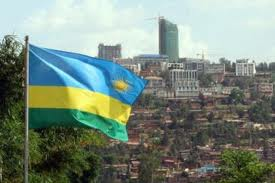
Landlocked, under-endowed, war-ravaged, Rwanda a nation of 10.5 million people has faced a number of disadvantages, not the least of which was the ethnic strife between the Hutus and Tutsis that has ravaged the country in the past. And yet it in spite of these setbacks, it has experienced very respectable growth figures (averaging 7.4 per cent per annum) and improving social indicators over the past decade.
Rwanda has undertaken significant efforts to reform its regulatory environment. Just consider the following:
- The World Bank ranks Rwanda the 4th best country in Africa to do business, after Mauritius, South Africa and Botswana.
- It only takes 3 days to set up a business, the 8th shortest time in the world.
- The country is in the 71 percentile rank with a score of 53/100 in Transparency International’s Corruption Perception Index, placing it in the same class as Malaysia and South Korea.
So how has a country which suffered many years of war and as much corruption as any other impoverished nation, managed to turn things around?
Well the short answer is they did this through an accommodative political settlement and the help of both conventional and unorthodox institutions and economic strategies.
Rwanda has had a long history of ethnic violence between the two main rival tribes. From pre-colonial times up to 1959, the pastoralist Tutsis were the ascendant political class over the agriculturalist Hutus. Ethnic differences were exaggerated under colonial rule. In the lead up to independence in 1962, Belgian colonists transferred their support to Hutu elites. This led to mass killings of Tutsis many of whom fled the country.
Two Hutu regimes ruled the country from 1961-94. Having a single-party dominate politics for most of this period did not prevent the nation from succumbing to decentralised rent-seeking and clientelist behaviour. A group known as Akazu was at the apex of this system. It was related to but not controlled by the administration.
Tutsis sought to regain control of the country through an invading Rwanda Patriotic Army. This culminated in the genocide of 1994 by retreating Hutus. After consolidating their hold on the country, the Rwanda Patriotic Front (RPF) established a government of national unity incorporating moderate Hutus, one of whom led the country as its president.
Although a certain amount of political repression in the guise of preventing a return of “ethnic ideology” has occurred, the coalition governments comprised of all legal parties in parliament being proportionately represented in cabinet (the ruling RPF holds no more than fifty per cent of the portfolios) has succeeded in keeping the nation stable. This inclusiveness along with its program of restorative justice known as gacaca has fostered reconciliation and allowed the country to experience improvements in social and human development not seen previously.
The intrusive intervention of government in everyday life at times borders on social engineering as the government has sought to follow the Singaporean model in both economic and social policy implementation. President Paul Kagame (elected in 2003 and then again in 2010) has been labelled the global elite’s favourite strongman for improvements to public service delivery, particularly in health and education.
Departmental line agencies have been managed through an institution of performance contracts known as imhigo which Tim Kelsall describes as “modern performance agreements supported by a significant component of moral pressure and neo-traditional gloss.” This combination of formal scientific management theory and homegrown practices has permeated down to the grassroots by roping in local officials and civil servants.
On the economic front, Rwanda has applied a hybrid approach to investment promotion. On the one hand, it has adopted policies and institutional arrangements considered best practice by the World Bank’s Doing Business surveys. Responsibility for managing this has been assigned to the Rwanda Development Board (RDB). But this works in parallel with a more activist approach in industrial policy with the RPF’s holding company, Tri-Star Investments getting involved in joint ventures and start-up companies.
Tri-Star helped the RPF raise funds during the Congo wars to overthrow Zairean dictator Mobutu Sese Seko through trading metals in international markets. The surplus achieved was then channeled towards domestic private sector development. The holding company has initiated many successful ventures with demonstration effects for the rest of the economy. Telecoms is one example. When Tri-Star sold part of its stake in Rwandatel in 2007, it got five to ten times its initial investment in the company.
Because profits from Tri-Star that are not ploughed back into its businesses revert to RPF, the party is financially independent. It uses this to fund its political campaigns without having to resort to political donors. Kelsall explains what this does:
The RPF’s financial solvency obviates the need for party officials to engage in election-related corruption, which in turn allows the party to take a very tough line on corruption among its leading supporters and in the bureaucracy.
Apart from Tri-Star the government has also orchestrated the formation of other funds, the Horizon Group belonging to the army, which undertakes socio-economic projects to produce productive enterprises, and the Rwanda Investment Group, a consortium led by domestic and diasporic elite.
The purpose of the second group is to raise capital other than through foreign borrowings to invest in projects of strategic national importance. Without such an interventionist approach, much of the agricultural and industrial transformations currently underway in different sectors of the economy simply would not be happening.
The case of Rwanda demonstrates many similar traits to that of the Northeast Asian developmental states. The RPF led government faced existential threats from the opposition in exile and from a potentially hostile ethnic majority at home just as the South Korean and Taiwanese states did from North Korea and from mainland China.
These threats have kept the ruling RPF focused on improving social and economic well-being for its citizens to maintain its legitimacy and hold on power. The regime has exercised a capacity for long-range vision and forward planning contained in its Vision 2020 roadmap, free from the influence of rent-seeking, private interests. It has ruthlessly pursued its policies at times through heavy-handed regulations and enforcement of rules.
The low crime, low corruption, low red-tape environment this has fostered was not enough. The RPF has used its clout to address market failures and encourage the adoption of productivity enhancing new technology. Through its holding company and other private-led investment groups that it has brought into being, jobs have been found for talented managers and skilled workers that might have otherwise gone overseas.
The Rwandan experience demonstrates the capacity of poor nations to bring about a system of governance that is relatively competent and free from corruption within a short span of time using home-grown institutions, resources and talent. The extremely harsh and disadvantageous position it faced did not become a hindrance, but rather provided greater incentive for it to go down the road it has followed. Surely, any emerging economy seeking to do the same should take heed the lessons from Rwanda.

