Showing posts with label behavioral economics. Show all posts

Friday, April 14, 2017

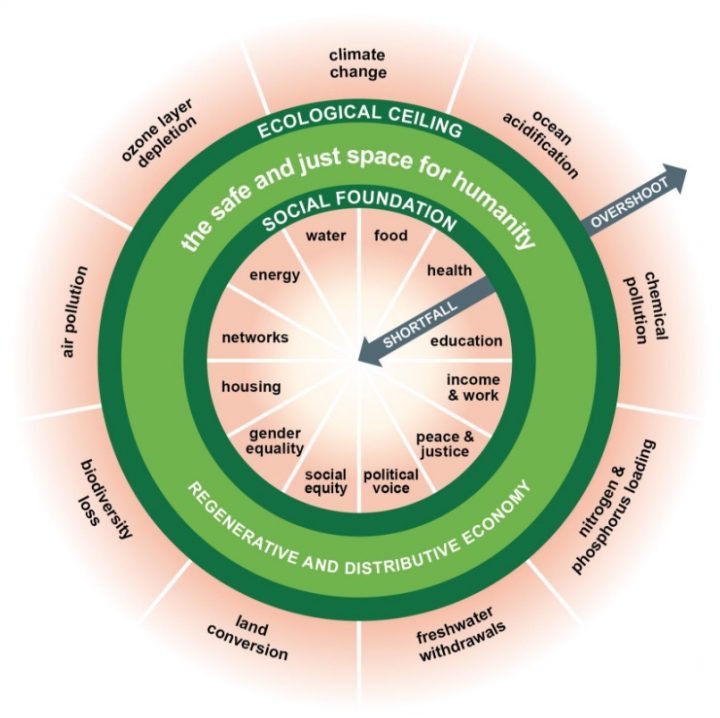
21st century economics is about thickening the doughnut, rather than expanding the pie


Kate Raworth's new book Doughnut Economics: 7 ways to think like a 21st century economist is out. The book calls for a radical re-think of basic economics 101 as it is presently taught.

Friday, October 19, 2012

Mind the (Gender) Gap


This week, as the second presidential debate unfolded, as Republican standard bearer Mitt Romney sought to close the lead of President Barrack Obama among women, an unfortunate choice of words used in relating a story about his search for women to fill his cabinet as governor of Massachusetts set off an internet frenzy around the phrase "binders full of women".

Despite that, it appears Mr Romney has been able to narrow the gap with women in the key battleground states that will decide the election, although nationally, the gap remains sizeable. Around 1980 was when the women's vote swung in favour of the Democrat Party, and vice versa for men according to Ronald Ingleheart and Pippa Norris. They pointed out that
The emergence of the modern gender gap in America is due to the way that women moved towards the Democrats since 1980 while men moved towards the Republicans on a stable, long-term and consistent basis, thereby reversing the pattern of voting and partisanship common in the 1950s. 
They theorised that as women grew more educated, career-oriented and independent, they began to abandon their conservative leanings in favour of a more progressive message from the liberally-minded Democrats. In  every US presidential race since 1988, every single Democratic candidate has been supported by a majority of women voters up until Barrack Obama's election in 2008.

Meanwhile in the eight presidential elections since and including 1980, the Democrats have only twice secured a majority of male voters--in the 1992 and 2008 elections when the US economy was in bad shape.

Using the World Values Surveys, Ingleheart and Norris show how that the women's vote has consistently shifted more and more towards the more progressive parties in most advanced countries, some post-communist countries and a few developing nations.

By 1995, a solid pattern had emerged. The key to George W. Bush's victories in 2000 and 2004 was in narrowing this gender gap, which Romney is emulating.

Meanwhile in Australia, PM Julia Gillard has changed the definition of misogyny by branding the leader of the opposition as such in parliament.

Her 15-minute speech which went viral worldwide helped to convince the Macquarie and Merriam-Webster dictionaries to adopt her usage of the word and define misogyny as "an intense prejudice against women" instead of merely "hatred towards women".

As the head of a Labor government, Ms Gillard has enjoyed a substantial advantage among women voters as the preferred prime minister of Australia, while here rival, Mr Abbott has enjoyed a similar advantage among men.

It was at the end of the 1990s that Australian voting patterns followed America in developing this gender gap, based on the analysis of Ingleheart and Norris back in 1999. This seems to have continued.

Friday, June 22, 2012

Tackling Obesity


Mayor Bloomberg’s ban supersized 16 ounce servings of sugary beverages in New York’s restaurants, street carts, movie theatres, and stadiums has placed the issue of obesity squarely on the map.

It is as American as burgers and apple pie. Yet, Mayor Bloomberg who founded a business empire on free trade, wants to restrict the sale of sugary drinks to the public. There is a simple reason behind it: obesity costs the city billions a year in related health expenses. A better way of reducing the burden is by way of prevention.

Gary Becker of the University of Chicago, whose insights into the rational thought processes behind addiction opened the door for others to push the boundaries that separate economics and psychology, discusses the opposing views in this debate:

On one side of the question are the libertarians who argue that individuals, in particular consumers, should have the freedom to make their own choices unless they hurt others. According to this view, consumers have the right to drink and eat what they prefer, but driving while drunk should be punished because drunk drivers are more likely to get into accidents that hurt others. One qualification is that when consumers do not have enough information to make good decisions, governments may help in providing that information. An example is the requirement that packaged foods show the amount of fat and certain other ingredients they contain.

On the other side are those who claim that many consumers are not able to make decisions in their self-interest. These consumers, according to this argument, can be fooled by the way choices are presented, may have limited self-control, may rely on inefficient rules of thumb, or for other reasons make bad choices. There is even a literature on “libertarian paternalism”, which argues that governments “ … should attempt to steer people’s choices in welfare-promoting directions without eliminating freedom of choice” [emphasis mine].

To tackle obesity, there are a whole slew of policy options. On the less interventionist side, public campaigns such as the one championed by First Lady Michelle Obama aim to inform and advocate healthier eating habits and lifestyle choices. Part of this includes labelling on menus that provide the caloric content of the items served. 

The problem is they do not always work, and businesses complain that they are an additional cost burden. Some Republicans like Sarah Palin believe that requiring such labelling is already too intrusive much to healthy food advocate Jamie Oliver's chagrin.

It is true that the costs of information cannot be taken for granted, but one can argue the benefits of supplying such information outweighs whatever costs are involved. The same sort of argument is behind providing warnings on cigarette packs or alcoholic content on liquor drink bottles. Mayor Bloomberg’s approach however is based on the notion that people don’t always heed such warnings.

If information and advocacy campaigns have limited success, particularly to those who are predisposed to certain forms of behaviour (as proven by neuroscience), the more interventionist policy tools might be called for including imposing a combination of taxes and subsidies, regulations and restrictions on the unwanted commodities and activities.

Becker believes that a ban on large drinks might actually lead to the public consuming more sugary drinks rather than less. He supports instead the idea of not serving sugary drinks to children whose discretion as consumers can still be moulded

Suppose that drinks come only in 10 and 16-ounce sizes. If the 16-ounce size were banned, enough consumers might substitute 2 10-ounce drinks for 1 16-ounce drink to increase total consumption of these drinks. Of course, the drink market might respond with offering other sized drinks, but the main point would still hold that the ban could raise consumption of sugary drinks.

Children are less likely than adults to make an effective trade off between current pleasures and future costs. This is a traditional reason for distinguishing between children and adults in formulating policies. The implication in the case of sugary drinks would be to restrict access by children to these drinks. For example, these drinks could be banned from schools and other places where children congregate, or young persons might not be allowed to purchase these drinks [emphasis mine].

One other approach to curbing consumption of unhealthy food and drink is the so-called fat tax. Recent research has demonstrated that for this to work, a threshold level of 20% needs to be imposed as a tax to lower consumption among adults. Denmark, France and Hungary already have introduced some version of a junk-food tax or sweetended-drink tax. Twenty three states in the US including New York have done the same.

Though the effects of this tax may be regressive as the poor generally consume more of it as a proportion of their intake, if the tax were used to expand health insurance coverage to the lower income classes, it might correct the regressive nature of the tax. It would at the same time improve the fiscal positions of cash-strapped governments.

Despite what the business lobby and libertarians say, the public cannot turn a blind eye towards the problem. With over a third of its adult population now clinically obese, costing American taxpayers $150 billion annually, and with 20-50% of the populations obese in countries as diverse as Kuwait, Columbia, the Philippines and China, it is high time that policymakers focus on tackling the problem before it literally eats them out of house and home.

Tuesday, April 24, 2012

Austerity and Trust

Image credit: marketjyotish.blogspot.com
As weekend voting in France and the collapse of the Dutch government signaled a backlash against austerity in Europe, analysts are wondering what its impact might be elsewhere.

Simon Johnson believes that the replacement of right of center governments with left of center ones won't change a thing as options are limited. The Austerity Has Just Begun is the way Johnson states their predicament.

Robert Reich draws lessons from Europe for the US as the presidential campaign season kicks off. For Reich it is not enough for the Democrats to say that "things would have been worse" under the Republicans. With trust in both their parties running low, neither camp has been able to establish a statistically significant lead over the other as the anemic economic recovery plods along

The UK budget recently passed by the Conservative-led coalition government might provide a few clues to US voters as to what life would be like under a Republican White House and Congress. Aside from effectively cutting entitlements to pensioners and reducing state spending at a rate unseen since the end of the second world war, the treasurer George Osborne eased taxes on the top marginal tax bracket by 5%. This has subsequently led to a precipitous fall in their polling.

Even in Australia, the debt and deficit debate is raging even as the government promises to deliver a surplus as it hands down its budget next month. Although it might be the sole advanced country that can afford at the moment to incur a deficit, the Labor government is being cornered into this box by the conservative opposition which promises to outdo them in reining in spending (despite the fact that they too have spending proposals of their own).

Psychological experiments involving groups and leaders have shown that when voters identify with their leader or consider him or her "one of them", they are more likely to accept withdrawal of resources (austerity) from that leader than if it were imposed by some outsider. When a leader who does not fit in with their group favors his own group with resources (tax cuts), they are also more likely to perceive this as unfair.

If elections are to be framed as a contest of who voters trust more in handling the economy, the likelihood is that conservatives will have an edge (as in the case of the UK where tories still poll better than Labor in terms of economic management).

If elections are fought over which party voters are more likely to trust to scale back entitlements in a socially responsible manner, the party associated with the broad middle and lower income classes is more likely to pull ahead. Likeability and trust is perhaps what it all boils down to.

Friday, October 28, 2011

China's Hard Landing: Is it around the bend?

Last June, I speculated that a hard landing in China might be around the bend. That was even before the US downgrade and EU debt crisis unfolded. Now it seems the events of 2007 culminating in the collapse of Lehman the following year and the global stimulus in response to the North Atlantic crisis that followed may have returned to bite the People's Republic.

Reports of China's heavy handed treatment of foreign companies, defaults on loans and a slowing property market are developing into a credible narrative. Doomsayers like Rhoubini and Chanos have spoken. They predict the hard landing is on its way. Meanwhile confidence in China still remains strong with the EU looking east for help in financing its stability fund and Australia still expecting to profit from this Asian economy's thirst for iron ore and other mineral deposits as it did during the last global downturn.

What happens next depends on the ability of China's authorities to handle the current softening of global demand for its exports. Back in 2008, it engaged in a massive fiscal stimulus program. The unwinding of that stimulus is what gives the impression to many that it was headed for a soft landing. It can very easily turn the tap back on if the situation deteriorates. Their effectiveness at reading the situation will determine whether it has a soft or hard landing.

Tuesday, August 30, 2011

Does anyone deserve to be poor?

The Nobel winning economist, Gary Becker, whose work on human capital I deeply admire writes a piece called Deserving and Undeserving Inequality in the blog which he shares with Richard Posner. In it he distinguishes between good inequality (deserved) and bad inequality (undeserved) saying
The great majority of people in different cultures do not object to someone who has made lots of money when they have superior abilities and talents, and they work hard at producing what are considered useful goods or services.
The meritocratic society with upward and downward social mobility would be in Becker’s view the most acceptable form. In this just society, the cream always rises to the top. He cites actors like Tom Hanks and Jennifer Anniston, entrepreneurs like Bill Gates and Steve Jobs, and skilled professionals like transplant surgeons who have grown rich by applying their exemplary talents and skills.

In contrast, Becker poses the problem society seems to have with hedge fund managers who make use of arbitrage (momentary bargains unnoticed by the market) to make huge sums of money. He lumps them together with speculators, Russian oligarchs and monopolists who enrich themselves through unfair, uncompetitive means (the latter two through government fiat).

Becker of course uses human capital theory as his framework for addressing this issue. Under its framework, individuals who acquire knowledge and skill through education and training (one cannot gain it any other way as it cannot be inherited or passed on) deservedly earn private returns in the form of higher incomes over the remainder of their working lives.

A meritocratic society should in Becker’s view reward the investments made by individuals in themselves and not rely on some other criteria. Elitism, the polar opposite of meritocracy rewards individuals for investing in other things (social standing or being raised on the right side of the tracks, marrying into the right family, etc).

It all sounds rational and justified, which is why Becker says “the great majority of people in different cultures” accept the legitimacy of a certain form of inequality. The wisdom of crowds is evident, until we start to consider the actual “merit” of the argument.

Economic, behavioral and neuro scientific research has demonstrated for instance that when it comes to employment, so many other factors aside from talent and intelligence determine the outcome of a hire/fire decision. Tall, handsome, Caucasian males for instance tend to earn more than their peers of equal and (as labor economist Daniel Hamermesh demonstrates) of even higher educational attainments.

If you are a plump woman working alongside office waifs, then you are more likely to be laid off during an economic downturn compared to your skinny female counterparts. In fact, studies in the US and replicated in other parts of the world show that job applicants could even be screened out simply because their names sound ethnically diverse (those with names such as ‘Tamika’ for instance got less callbacks from recruiters compared to those who had typically Anglo-Saxxon names like ‘Sally’).

The ‘good-bad’ dichotomy looks awefully strained at this point.

Reflecting on this a bit, I begin to wonder, how much of our lot in life really depends on our own actions, and how much of it depends on chance. In fact, beyond just the narrow hedonic enjoyment of earning more money, if the pursuit of happiness were to be the ultimate measure of success, then we could find an even bigger divide opening up.

About 50% of our ability to have a pleasant life depends on our genes, which is not very modifiable, according to psychologist Martin Seligman (other studies suggest this could be as much as 60%). This would not be good for those who weren’t born with the right disposition.  Of course, for those who are disadvantaged in this way, they can still influence their level of happiness by focusing on the residual aspects of life that can be modified to produce happiness, a mere 15-20%. That is if they can afford to pay for therapy which again disadvantages those who happen to be residing at the bottom of the economic ladder.

As James Kwak who recently re-read John Rawls’ A theory of Justice, has said
well-educated, hard-working people did not deserve to make more money than other people, at least not as a normative (as opposed to a utilitarian) matter.
Kwak quotes the passage from Rawls’ treatise to support his claim
[The liberal conception of the second principle of justice] still permits the distribution of wealth and income to be determined by the natural distribution of abilities and talents. Within the limits allowed by the background arrangements, distributive shares are decided by the outcome of the natural lottery; and this outcome is arbitrary from a moral perspective. There is no more reason to permit the distribution of income and wealth to be settled by the distribution of natural assets than by historical and social fortune. . . . Even the willingness to make an effort, to try, and so to be deserving in the ordinary sense is itself dependent upon happy family and social circumstances.
At work, I am currently involved in developing and implementing a pilot project that seeks to help socially disadvantaged groups improve their learning and employment outcomes through a range of interventions. Social disadvantage comes in many forms. The issues encountered by our case officers usually involve multiple and complex needs such as drug and alcohol abuse, inter-generational poverty, lack of economic opportunity where they live, sexual abuse, abandonment, domestic violence, discrimination, disability both physical and mental.

Unfortunately much of Australian mainstream society sees these individuals as “bludgers” or people who leech off the tax and welfare system. The mainstream of society cannot really see why they can’t just find work in a country where there are skills shortages in many industries. I must admit, I used to subscribe to this way of thinking too.

This is reflective of meritocratic aspirations Aussies share with their American and British counterparts. A study by Dan Ariely and featured recently by PBS finance correspondent Paul Solman demonstrates this. Respondents were given three pie charts resembling the spread of wealth in unnamed countries. The first showed an equal distribution of wealth. The second showed a slight advantage to the two top quintiles. The last showed a very disproportionate concentration of wealth to the top 40%.

They were asked to specify which country they thought the US represented. Most went for the pie chart that showed a slight skewing of wealth to the upper classes. They were unaware that it was actually the third chart which they thought represented a third world country which represented the US. And yet, as the piece by Solman suggests, there is a lack of appetite among voters for tax reforms that would correct such a lopsided distribution of income and wealth.

At least in affluent countries, there is a system for attending to marginal groups. In less developed countries, the problem of addressing poverty, inequality and social disadvantage is harder because of scarce resources. Even in countries like China and India which have lifted millions out of poverty, this mostly depends on where people live. Those who reside along coastal provinces in China tend to have higher incomes than those that live in the interior whose incomes are closer to some countries in Sub-Saharan Africa.

In a middle income country such as the Philippines that has experienced growth but not a lot of change in its distribution of wealth, the experience has been that such growth has not been inclusive. Not only is economic opportunity not evenly distributed in the population, but this distribution itself seems to be perpetuated by laws and policies of successive governments.

I say this because the sorts of reforms that have been proposed to address disadvantage, namely tax reform, land reform, and reproductive health have been held back or denied the kind of support, moral, political, and financial, required for them to be implemented correctly. There are two kinds of attitudes that might be responsible for this:
  1. Self serving bias is the tendency to claim more responsibility for successes than failures. Thus, those who are well-off tend to think they deserve their successes.
  2. Just world phenomonon is the tendency for people to believe that the world is just and therefore people "get what they deserve." So those who hold this belief look at poverty and social inequality and think that those who suffer from them deserve to be where they are.

These forms of ‘cognitive bias’ may lead us to misapprehend the problem of social disadvantage and inequality to the point that we may even claim self-righteously that certain outcomes are just when in fact they are not. I certainly have come to reconsider my views on this. What about you? 

Tuesday, March 22, 2011

Reframing the Climate Debate

The Climate debate has proven to be a diabolical policy problem for politicians in Australia, a country with one of the highest carbon dioxide emissions per capita in the world having an economy heavily dependent on the export of coal and other carbon intensive commodities.

It was partly responsible for the sacking of a once popular PM by members of his own party during his first term. It was dragging down the popularity of the lady that replaced him. Even a coalition between the Greens, Labor and a few independents representing country-based electorates could not provide a consensus in the debate.

Then came the proposal of an economist to offset a carbon tax with an income tax cut. The idea is hardly new. Even the Prophet of an Inconvenient Truth advised the scrapping of payroll taxes in lieu of a carbon tax a few years ago. The idea was to lighten the burden of productive activity (labor) while increasing it for environmentally destructive ones (pollution).

The advocacy of this tax cut approach as part of an overall principle of making the polluter pay while compensating vulnerable members of the community has stemmed the bleeding of support as expressed in the poll numbers and restored this government's legitimacy at least for now.

The re-framing of the debate is something that has eluded previous proposals for a carbon pollution reduction scheme. The use of a tax to price carbon rather than a synthetic market (read: emissions trading scheme) is much simpler and straight-forward. It also avoids much of the costly transactions costs involved in setting a complex trading system.

The use of tax cuts to offset additional living costs on households to whom polluting energy firms would pass on any tax burden does away with the notion that the "little man" would be the hardest hit by the tax. It also reduces the disincentive to work without creating budget pressures.

Indeed the Opposition will wish that it had proposed the Carbon tax with the accompanying income tax cuts ahead of the government as what a conservative think tank had earlier done. Having been outflanked by Labor on this issue, it now has to reconcile its carbon abatement policies which opts to use government regulation rather than a market mechanism something that economic liberals are not known for. Being the party that invented "middle class welfare" it will now find it difficult to counteract the middle and lower income tax cuts now being considered.

Thursday, February 10, 2011

Classic Under-Investment

A work colleague of mine recently raised a question about why so many young people opt out of school early and never pursue any further education afterwards. For them, any sort of economic reward or incentive to invest in them just won’t be met with enthusiasm. “Why then should governments waste taxpayer’s money encouraging them to do so?” she asked.

It is a classic under-investment problem, I answered, involving the accumulation of human capital where despite the provision of services, an underwhelming take-up rate on the part of students is the response. Of course the irony is that in the developing world, there is no shortage of people that would be interested in training that would lead to better employment outcomes. For example, in this published paper that I wrote back in 2007, I found that the college participation rates in the Philippines were the same as in Australia, despite a lower proportion of GDP dollars being publicly spent there on tertiary education.

Society is worse off if the potential productivity and availability of skills is not realized due to this under-investment in human capital. So back to the original question, should the government spend greater effort in encouraging a larger proportion of young people to remain either in school or post-school education for longer if they apparently do not seem all too keen?

In answering that, it is best to examine the way we frame the problem first. The traditional approach is based on a rational interpretation of human behaviour, in which the choice of the individual must be respected at all costs, in that only he or she can determine what is best for him or her, and if that means less schooling, then so be it. 
An alternative based on a behavioural perspective however provides a different set of lenses to appreciate the problem more fully. From this perspective, there are several reasons why individuals may behave irrationally.

The first is that humans tend to over-estimate their abilities. This overconfidence leads them to settle for a sub-optimal level of schooling. Youths with an artistic bent might drop out of school believing they can successfully break out in creative careers. Teen couples do so believing too much in their ability to conquer the difficulties of raising a family. Others who are delinquent believe in their ability to lead a lifestyle outside the law. You get the picture.

The second reason is that humans have a present-bias. Meaning, time has a way of distorting decisions that involve the weighing of costs and benefits, especially when costs have to be borne in the near term for some future benefit. Like the problem of saving for retirement or improving one’s health and fitness, under-investment in education and training is the result of people putting more importance to the present to the detriment of the future.

The third reason is the commitment problem. Even when individuals decide to undertake training, they often fail to follow through with their commitment. The phenomenon of starting but never finishing--call it “buyer’s regret”, “cognitive dissonance” or the lack of persistence; individuals face an uphill battle when it comes to sticking to their commitments particularly because of overconfidence (which in this case is the overconfidence to complete what they signed-up for) and present-bias (putting off assignments until the last minute).

Finally, there is the information problem that youths encounter when making career choices. What occupation suits them? Which one will be most rewarding? What type of course to take, and which institution to register with? These are difficult decisions to make because they are infrequently faced, so the person cannot benefit from experience (or hindsight) in making them. Even the potential for social learning or gaining advice from one’s elders who have encountered making such decisions before can be obstructed due to personal biases. 

With all these problems facing the individual, it is probably a wonder why anyone makes the right decision. It certainly provides the rationale for the state to stimulate greater demand for education and training. In this endeavour, there are two possibilities. The state can deal with either the front end or the back end of the cohorts coming through. The back-end involves nudging youths of school-leaving age to persist in school through career advice and greater access to information and varied training opportunities.

The front-end means intervening in early childhood as a way of affecting values and preferences. As this study showed, good quality kindies matter in determining the long-run earning capacity of pupils. The results of such a study are quite controversial, but I think that the reason early intervention works and has a long-lasting impact has more to do with instilling a love of learning and imparting a sense of wonder about the world in kids that sticks with them throughout life and keeps them engaged in school much longer than would otherwise be the case.

Wednesday, February 9, 2011

Instead of Tax Cuts, Nudges to Join Community Groups?

In Baseline Scenario, James Kwak neatly discusses the implications of the science of happiness and that of behavioral economics on public policy.

It is an intriguing read, as he observes that the two seem to point us towards opposite directions. While behavioral economics tends to provide a basis for the state to get involved intimately with people's lives (i.e. finances, diet, fitness, sexual activities, vices, child-rearing to name but a few), the science of happiness supports the notion that besides guaranteeing a minimum standard of living, the state should take a back seat to churches and other forms of socio-civic engagements. That is because additional income above a minimum threshold does not increase happiness as much as human contact (among other things).

So rather than handing out tax cuts (that increase our incomes but do not necessarily improve our level of happiness), should the state be providing what behavioral economist Richard Thaler calls "nudges" to encourage greater social connections?

That would give both liberals and conservatives something to be both happy and sad about.

Thursday, July 22, 2010

Nudge or Shove? Debating the Merits of Behavioral Economics in Policymaking

In designing policies that reduce negative externalities or public "bads" (as opposed to public "goods") such as the ills associated with the rise of obesity or carbon pollution, governments have borrowed many instruments from the behavioral economist tool kit.

The recent health care measures in the US that mandate the printing of caloric content of food in menus and packages is one example; so is the use of peer pressure in the billing systems of regulated energy companies that use informational cues (smiley faces) to instruct customers of their relative efficient use of power (compared to that of other customers).

These approaches try to influence irrational decision-making by some without necessarily limiting the choices of those for whom they are intended and without imposing unnecessary costs on others whose decisions are perfectly sound and rational. A more direct and appropriate approach to resolve these problems according to Lowenstein and Ubel in a recent NY Times piece entitled Economics Behaving Badly would be to increase the relative cost of consumption whether of fatty processed foods  by withdrawing subsidies to their key ingredients like corn oil or that of energy by putting a price on carbon.

The two pillars of the behavioural economist school argue that policymakers have taken the politically expedient route of utilising the light touch or "nudges" espoused by their field when the more direct but unpopular approach of applying subsidies and taxes prescribed by traditional economists or "shoves" would guarantee the desired outcomes more effectively.

Not so, counter Sunstein and Thaler, authors of the influential book Nudge: Improving Decisions About Health, Wealth, and Happiness. Both traditional and behavioural approaches are needed to influence decisions by rational and irrational actors. The fault they say lies in the politics of the situation, not the economics of it.


Saturday, June 26, 2010

Economists Behaving Irrationally (or Economists Gone Wild!)

Brad de Long considers it "the greatest improvement in economics in my lifetime."

He is referring to the Journal of Economic Perspectives' recent decision to allow open access to its articles on the web. I tend to agree with him on this and hope that other serious academic journals follow suit.

Anyway, I took the opportunity to scan the contents of its archives to find articles that discuss a relatively new perspective in the economics profession, and that is how individuals or agents do not act rationally most of the time.

I came upon this one by Liran Einav and Leeat Yariv entitled What's in a surname? The effects of surname initials on academic success. It finds that among leading economics departments in the US, the supposed pre-eminent exemplars of rational decision-making,
Faculty with earlier surname initials are significantly more likely to receive tenure (...) are significantly more likely to become fellows of the Econometric Society, and, to a lesser extent, are more likely to receive the Clark Medal and the Nobel Prize. These statistically significant differences remain the same even after we control for country of origin, ethnicity, religion or departmental fixed effects.
There you have it, evidence that economists behave irrationally. The authors go on to state
We suspect the “alphabetical discrimination” reported in this paper is linked to the norm in the economics profession prescribing alphabetical ordering of credits on coauthored publications. As a test, we replicate our analysis for faculty in the top 35 U.S. psychology departments, for which coauthorships are not normatively ordered alphabetically. We find no relationship between alphabetical placement and tenure status in psychology.
Based on this research, not only do economists behave irrationally, their actions are based on others behaving the same way(!) as shown by their careful selection of co-authors and their increasing unwillingness to follow the alphabetical ordering norm. 

I suppose the core principle of economics about people responding to incentives still holds; whether such behaviour is based on rational or irrational norms is quite another thing altogether.


Wednesday, June 3, 2009

Shiller on Animal Spirits

Robert Shiller in his address to the RSA notes that the use of the term animal spirits or spiritus animales referring to animating feelings that drive our thoughts and actions has had a 2000 year history. Keynes used this term in the 1930s to portray the motives that lie behind the market and to explain the occurrence of depressions. He used this to argue for macro fiscal stabilisation policy to be used in conjunction with monetary policy in undermining fear that was gripping agents in the economy.

Thirty years later, the efficient markets revolution of the 1960s as espoused by scholars Modigliani and Miller converted many to the perfect markets hypothesis. This theory eventually gained ascendancy to thwart Keynesian macroeconomics and led to Thatcherism and Reaganism in the 1980s. Ultimately, faith in the assumption of perfect information that markets embody may have left markets exposed to extreme cycles of bubbles and busts, shocks which gradually have eroded confidence in the theory itself.

He speaks of his long association with George Akerlof the former president of the American Economics Association spanning over twenty years in developing behavioural macroeconomics and with Richard Thaler in developing behavioural finance. Over fifty years of research since Keynes has contributed to some extensions of animal spirits. The book uses the constructs so often ignored in the economic literature relating to:
  • Empathy: a modern term that is distinguished from sympathy, relating to the way we are able to experience something that is happening to someone else, e.g. we feel left out, sad during an expansionary bubble if we are not invested in the market and are not profiting from it unlike those around us,
  • Fairness: people are very alert to being slighted, i.e. sticky wage theory which is based on rigidities found in labour markets arises because people react negatively towards wage reductions,
  • Corruption/bad faith: comes as a result of a lowering of standards (due to greed for example) i.e. the sub-prime mortgage meltdown has led to distrust towards the banks and legal contracts in general and leads to an unwillingness to transact,
  • Money illusion: the way individuals react to inflation and deflation is based on the illusory effects of the value of money,
  • Stories: social psychology tells us that the mind is organised around stories or narratives; people relate to stories rather than dry statistics.
Overall, these insights tell us that people are proximately rational. It is only under stressful conditions when undertaking decisions of significant emotional content that the animal spirits take over the rational mind. A memorable moment came when he quoted Larry Summers, chief economic advisor to Pres Obama who said that on the crucial policy issues of the day, none were being informed by economists.
In responding to the possible collapse of the banking system, governments in Britain and the US acted swiftly in order to cut off the oxygen from the narratives that were building to prevent stories that were proliferating of individuals affected by the possible bank collapses. Their accurate reading of the stiuation did not come from an understanding of behavioural economics but from their survival instincts.

When a member of the audience challenged his view that the crisis was driven not by these “panic” attacks but by the accumulation of reserves in China that supplied cheap money to US housing markets, Shiller pointed out that China’s massive savings rate developed over time. It came as a result firstly of the One Child Policy which was the Communist Politburo’s response to the narrative built up in the ‘70s by Club of Rome about the “limits to growth”; and secondly, by the story woven today of China’s resurgence in the global scene. The result of this has been the sense of nationalism and self-sacrifice that is justifying this need for savings. Fascinating stuff!

Monday, June 1, 2009

Angels and Demons in Our Heads


For those attempting to diet, quit smoking or save regularly, but find it impossible, recently concluded research has unlocked the inner workings of the human brain affecting the exercise of self-control, or what movies and cartoons have popularised as being our better angels and lesser selves.

Ever wonder why it is so harder for some and easier for others to stick to a diet, quit smoking or avoid spending money? The answer lends credence to the adage that “it’s all in the mind”. An interesting experiment performed at the California Institute of Technology (Caltech) has pointed to an area of the brain known as the dorsolateral prefrontal cortex (DLPFC) which acts as a modulator of our desires when undertaking value laden decisions—such as what food to eat.

Using magnetic resonance imaging, they have shown that it is this region that lights up when individuals exercise self-control. This area represents our “better angels”. The other region which is responsible for making us act on our impulses and desires is the ventromedial prefrontal cortex, or vmPFC. This represents our “indulgent” selves. Science Daily reports

"After centuries of debate in social sciences we are finally making big strides in understanding self-control from watching the brain resist temptation directly," says Colin Camerer, the Robert Kirby Professor of Behavioral Economics in Caltech's Division of Humanities and Social Sciences and another of the paper's coauthors. "This study, and many more to come, will eventually lead to much better theories about how self-control develops and how it works for different kinds of temptations."
Improving welfare

In relation to welfare economics, the study of maximising consumer welfare, the findings of this research challenges the notion that revealed preference always indicates the optimum choice. In other words, to maximise welbeing, policy should take its cue from what people say they intend to do (their reported preference), as opposed to what they actually do (their revealed preference).

The use of personal trainers as vividly portrayed in reality gameshows like The Biggest Loser to act as a constestant’s conscience demonstrates the necessity of adhereing to this principle. It has been shown in one study that providing cash incentives to subjects for a period of time to exercise makes the habit of going to the gym stick following the withdrawal of such rewards. Even in cases where their reported preference ex-ante goes against the preferred outcome, say for those who profess that their obesity is their lifestyle “by choice”, the ex-post preference might agree with the decision to lose weight.

It admittedly is more difficult to argue in favour of programs that would coerce people to do things for their own good. Civil libertarians will protest against this paternalistic violation of people’s rights. Hopefully with a little nudging, people could opt willingly to undertake certain behaviours:
For instance (as proposed by Todd Hare, postdoctoral scholar) it might be possible to kick the DLPFC into gear by making the health qualities of foods more salient for people, rather than asking them to make the effort to judge a food's health benefits on their own. “If we highlight the fact that ice cream is unhealthy just before we offer it…maybe we can reduce its value in advance, give the person a head start to making a better decision."
A combination of consumer watchdogs, mandatory labels in packaging and healthy competition does go a long way in framing choice towards the better outcomes. The deterrence of unseemly pictures on cigarette packets though might influence first time smokers, but not long-term ones. Perhaps, in the case of the latter, a shove, rather than a nudge, will be needed.

Friday, May 29, 2009

Deal or No Deal Part 2

I received a curious comment to the last post Revenue Write-Down: Deal or No Deal:
Rudd's budget strategy exhibits extreme political risk aversion. It would be a mistake to view it in economic terms.
This is in line with what many commentators have said was the way the budget addressed the economic recession in the near-term while avoiding the hard choice of dealing with the long-term structural imbalances identified by the Federal Treasury in its budget papers.

In part 1 of this entry, I had contended that Prospect Theory explained the way the Labor government was behaving in assessing the risks associated with the budget allocation decisions on spending and taxation. The theory predicts (accurately in my view) that faced with losses, the government would increasingly become risk-seeking as shown by its having thrown caution to the wind and engaging in deficit spending.

I failed to mention another aspect to this risky decision. This has to do with what US Defense Secretary Donald Rumsfeld made famous: the “known unknowns” or the things that we know we don’t know. In a word it’s called ambiguity.

As it turns out, the human brain has a bias against it, an aversion. When faced with a decision involving risk where the probabilities attached to events are unknown, humans prefer not to decide or to postpone a decision until the known unknowns turn into known knowns even when the risky decision involves a higher expected value. Ambiguity aversion has been shown to exist when the decisionmaker is experiencing the fear of negative evaluation (FNE) from others.

Here is a neat video explaning the theory of ambiguity aversion in relation to the Ellsberg paradox posted by another blogger.

Getting back to the comment, perhaps it was not a case of political risk aversion, but a form of ambiguity aversion. The government has in effect postponed the decision to rein in tax cuts, given the FNE associated with reliving the Keating Labor government’s experience in the last recession. And given that one single event assumed in the budget would resolve the issue for them (this is the GDP growth projection of 4.5% over six years) the probability of which was (and will remain for some time) unknown, it probably felt justified in delaying this hard choice.

As neuroeconomics shows, this is a powerful, evolutionary response that fits in perfectly with the human condition. Until ample evidence arises to clear the ambiguity or reduce the FNE associated with the structural adjustment task, we cannot reasonably expect the government’s response to be otherwise.

Thursday, May 28, 2009

Revenue Write-Down: Deal or No Deal


The shifting of the Federal Labor Government position from conservative fiscal stewards to that of aggressive deficit hawks bears striking resemblance to the behaviour of contestants on the popular game show, Deal or No Deal.

The way in which the Rudd Government has framed its first and second budgets is characterised by what decision theorists would regard as an inconsistent set of risk preferences. Prospect theory, as developed by Daniel Kahneman (Nobel Prize in Economics, 2002) and Amos Tversky provides a good explanation of the way it has behaved. In short, when faced with gains, a decision-maker (i.e. the government) tends to be risk-averse; when confronted with losses, she becomes much more risk-seeking.

The theory is responsible for adjusting the standard expected utility model of decision-making under risk. As it turns out context determines whether standard models work and when they don’t, as
explained by scholars Rose McDermott, James Fowler and Oleg Smirnov:
It may be that standard models work well when environmental conditions are characterized by abundance. However, when the external situation changes and individuals or groups begin to face real or perceived threats to survival, preferences will change in the predictable way.
This type of predictable behaviour has been seen in Deal or No Deal contestants when they start to lose the possibility of winning the larger cash prizes (see here for an explanation of how the game is played). Instead of taking deals equal to the average of possible cash prizes remaining, they often play on hoping to score the remaining higher amount.

Let’s play

In the first round of his fiscal budget cycle, Treasurer Wayne Swan was dealt a winning hand: a fiscal position in surplus, a smoothly running economy, strong property and commodity markets, healthy business and consumer confidence, trade surpluses as far as the eye could see (this was Treasury’s flawed assumption) and historically low unemployment. In fact, the only dark cloud on the horison was inflation, which was driven in large part by high oil prices.

So, in keeping with Labor’s election promise of delivering sound economic management, he brought down a budget that was conservative: no major spending (which would put upward pressure on inflation), a continuation of the tax cuts that the previous government had enacted, a few minor tweaks around the education revolution, but very little in terms of rocking the boat. A very respectable 2% of GDP in surplus was maintained.

Then the GFC broke. Within weeks, the official pronouncements
were that a severe financial cyclone was headed our way with a ferocity that had not been witnessed in a generation. Two rounds of fiscal stimulus were announced in quick succession leaving the coffers with a surplus of merely 1% of GDP (what they were unwilling to say then was that effectively with an expected slowdown, revenue write-downs of more than 1% were inevitable, so the government had already slipped into deficit at that point, but nevermind they thought, the stimulus might actually work).

Then the second round of the budget took place. This time the government literally was willing to bet the house. It went all-in. No such thing as cutting your losses, when the prospects were looking grimmer by the day. It took them a few days to acknowledge that the nation was as a result of its budget staring down a net debt worth a whopping 13.8% of GDP. It had changed its tack from being risk averse, economic conservatives to risk-seeking big-spenders, all in 18 months. Yet, despite all the recriminations it received for trying to spin the deficit negatives into a positive, Rudd and co were merely reacting based on nature’s inbred survival instinct.

The remaining hand

Ironically, political considerations had held them back from considering the full-on risk-seeking decision of cancelling tax cuts to address the
structural imbalances in the budget that had crept in as a result of overconfidence on the part of the Federal Treasury in the commodities trade boom. Again from McDermott et al a lesson in economic reform:

An important topic…is the decision by some leaders to implement radical economic reform…(f)rom Latin America to Eastern Europe, leaders like Alberto Fujimori in Peru institute bold economic reforms with severe costs for the population and, surprisingly, receive widespread support for such action. Similarly, leaders such as Boris Yeltsin in Russia and Vaclav Klaus in the Czech Republic were re-elected despite instituting costly economic adjustment plans (emphasis added).
By not addressing the fiscal imbalances in the present budget, the Feds have had to assume a V-shaped recovery; and yet, notwithstanding their optimism it will take no less than 13 years for the “temporary” debt to be erased. With the current talk of long-term bond spreads widening and credit downgrades over the horison (which will lead to higher debt servicing costs), time will tell if this act of hesitance towards reform in the wake of aggressive yet popular spending leads the government and the electorate down the track to a no deal situation.

Monday, May 18, 2009

Smells like “Animal Spirits”

Neuroscience is helping to settle the debate over what caused the Great Recession: was it imperfect information or irrational behaviour?


A very amusing tussle among two high profile economists and an appellate court judge has been featured in The New Republic (available online). I am speaking of George Akerlof and Robert Shiller whose book, Animal Spirits, was harshly reviewed by Richard Posner.

The book addresses the question what causes asset bubbles to inflate and burst. Animal spirits, a term used by John Maynard Keynes has come to mean in its current incarnation “variations in the level of trust, storytelling and human interest, perceptions of corruption or unfairness, anger and optimism, social epidemics causing changes in gut instincts and feelings”.

A long list—which is why Posner’s critique that a reliance on such as set of specific contextual exemptions to the standard rational macroeconomic model is unnecessary. He contends incomplete information is sufficient to explain mistakes made by rational actors in assessing the risks and rewards of investing. Ironically, if anyone should be making this argument, it ought to be Akerlof who pioneered the study of asymmetric information for which we won the Nobel Prize along with Mike Spence and Joe Stiglitz.

Which view is worth its salt then?

Lately, the blogosphere has been buzzing with news of a study out of the University College London or UCL in which researchers have identified a gene that affects our economic decisions or perceptions of financial risk.

Previous studies have identified the amygdala (the same area of the brain used in processing emotions) as being involved in considering such decisions. The purpose of the current study was to determine if a particular gene known as the serotonin transporter, vital in affecting nerve connection in the amygdala, helps respondents deal with something called framing.

Generally, individuals are loss averse. For instance, being told that there is an 80 percent chance of surviving an operation would be the same as saying there is a 20 percent chance of dying. A person might decide differently based on whether the positive or negative side of an argument is used as a frame of referrence.

Susceptibility to this framing effect could be exploited by slick salesmen, mortgage brokers, credit officers, and the like to the detriment of investors and buyers (think of the sub-prime mortgage mess). For this reason, Colin Camerer and others recommend “cooling off periods” in which buyers could essentially renege without cost to them. This would remove the incentive for firms to engage in high pressure sales tactics.

The study found that individuals with a certain variant of the gene were more susceptible to framing. The good news is that genetics only accounts for 10 per cent of the variations in decisions. The remainder could be explained by life experiences, in other words, by personal and social learning.

The bottomline is that "animal spirits" a theoretical construct to explain irrational behaviour seems to find concrete verification in this study. With neuroscience, the behavioural argument that irrational decision making comes into play in market failures finds strong support.

Saturday, May 9, 2009

A Nudge State, Nanny State or No State?

The public service has often been portrayed as either ineffectual or overbearing. It either produces nothing of value or worse it extracts from the dynamism of markets. With the advent of a new theory of the state, could things be about to change?

It was
David Brooks who proclaimed the rise of the “Behavioral Revolution” back in October 2008. He was speaking of the way regulatory frameworks are now taking account of imperfect rationality in much the same way that they took account of imperfect competition and imperfect information as part of the natural progression of relaxing assumptions about "efficient markets". The purpose of such regulatory reform is to protect consumers from schemes that exploit their lack of rationality or self-control.

The structure of any decision-making process is neatly depicted
here. Imperfect rationality means that faulty perceptions lead to false risk assessments lead to poor decisions by rational actors. These perceptual biases as described by Kahneman and Tversky provide the rationale for "nudges" or even "shoves" by the state to guide the most vulnerable in society to make good decisions without imposing harm on the rest.

The term coined by
Colin Camerer for this philosophy was asymmetric paternalism or libertarian paternalism as adapted by Thaler and Sunstein. Cognitive psychology and neuroscience is helping to confirm the dominance of human emotions in swamping reason under certain conditions. Consider a decision you have made in the past involving any one of the following:
  • Credit and savings
  • Houses and cars
  • Education
  • Careers
  • Marriage
  • Addictions
  • Child bearing
  • Health
Any one of these decisions involves a certain amount of emotional content. The infrequency of these decisions makes it improbable that individuals benefit from personal learning. And they have long lasting even intergenerational consequences. Social learning from family and friends as well as public education campaigns may help. But to the degree that people are subject to confirmation or self-serving bias (where we seek out information that confirms our position), forgetfullness, and a high correlation across groups, we witness their decisions having a cumulative or even contagion-like effect on financial markets, public health, industrial competitiveness and so on.

For those of us who provide analysis and advice in the public service or as part of political staff (whom we in the public service jokingly call the "dark side"), this means rethinking the way we design policies in the coming years.
The dichotomy is no longer between letting free markets work or imposing big goverment interventions. It means that the profession of public policy so often derided for not producing enough value or distorting its creation now has a way of enhancing value for the benefit of both markets and society.

Monday, May 4, 2009

Prepare to be nudged

Improvements to the “magic of the market” formula for maximising societal welfare involve intelligent “choice architecture” to address human frailties

According to Franklin Foer and Noam Scheiber, a new theory of state is in its embryos. In a piece for The New Republic they state that

Obama has set out to synthesize the New Democratic faith in the utility of markets with the Old Democratic emphasis on reducing inequality. (Nudge-ocracy: Barack Obama's new theory of the state, May 06, 2009)

They trace the genealogy of this new theory from the 70s with the disilllusionment of the “Old Democrat” establishment figure Charles Schultze with the command and control apparatus of the New Deal/New Society to the reinvention of government and pro-market stances of the “New Democrats” led by David Osborne and Bob Rubin to the current one unfolding. They say

…there is…certainly a sensibility that reigns in Obamaland. Perhaps the easiest place to see it is in the administration's fondness for behavioral economics, the branch of the dismal science that recognizes that humans aren't utility-maximizing utomatons, but flawed creatures who often screw up simple calculations and struggle with self-control. The key behavioral insight is that the way we frame choices matters enormously.

Much of this ethos finds its inspiration from Nudge, a book by his former colleagues at the University of Chicago Richard Thaler and Cass Sunstein (the latter was appointed to head up a regulatory review directorate in the influential Office of Management and Budget).


Foer and Sheiber dissect key decisions of the first 100 days of Obama in office over policies ranging from the banking and housing rescue plans to healthcare, education and the environment in which a preference for market mechanisms to state intervention has been evident to the chagrin of Old Democrats who prefer robust intervention. This is a brief synthesis:

  1. where Keynesians like Paul Krugman would have preferred nationalising the banks, Tim Geithner and Larry Summers offered incentives and “nudges” to entice public private partnering to help determine the price of toxic assets,

  2. where forcibly rewriting home loan contracts would have been more direct, subsidies were offered to creditors to provide easier terms to borrowers most at risk of default,

  3. where the unions preferred beefing up public health and education systems, public options involving competition from private providers were enshrined as a way forward,

  4. where environmentalists would have preferred picking winners, a cap and trade system was espoused.

The intent of these policies is not to do away with market mechanisms, but rather to correct for human frailties by offering incentives a.k.a. “nudges” to prompt individuals in the right direction. Foer and Scheiber state that

(i)n the grand scheme of things, these "nudges" were minor tweaks designed to elicit more rational behavior … Not all of Obama's nudges fall out of behavioral economics, per se. Some involve changing incentives to encourage certain activities and discourage others. Some involve fostering competition to trigger innovation. But, as in the behavioral examples, the Obamanauts typically have an outcome they want to promote. And, like the behaviorists, they instinctively recoil from imposing it unilaterally. So, instead, they monkey around with the choices people face, seeking to influence decision-making rather than mandate decisions.

Saturday, April 25, 2009

A Con at BrisCon


If you were faced with two investment opportunities:
  • one involving the purchase of a stock at 1/1000th of the asking price, and
  • the other involving the purchase of a stock with a possible future obligation to pay 2000 times the original unit value of your investment, which one would you take?
Obviously, the first one would be almost irresistible; the second would seem quite dubious to anyone. It came as a shock to many mom and pop investors that, in the case of their BrisConnections holdings, the two options were identical. As reported in the Sydney Morning Herald this week,
BrisConnections stapled units were sold in a initial public offering last July, with investors paying the first of three $1 instalments at the time.
They were then required to pay two further instalments, one this month and another in January 2010.
But many shareholders sold out of the stock after it was listed, with the units closing at 41 cents on the first day of trading.
They had plunged to 0.1 cent by October and have remained around that level ever since.
Many retail investors bought the units thinking they were getting a bargain, without realising that they would be required to pay a further $2 on each unit, making themselves liable for further payments up to 2000 times the value of their investment.
To borrow the words of Richard Thaler and Cass Sunstein, authors of the book Nudge, this is a case of poor “choice architecture”. One of the main points found in the book is that although many of us would like to think of ourselves as rational decision-makers, we are often primed to make foolish choices by of the way solutions are framed.
As behavioural economists point out we are (aside from being rational beings) subject to human frailties that our reasoning often gets confounded by complexity. What a layperson perceives as a perfectly reasonable choice upon closer scrutiny often turns out to be misinformed. Discounting this very nature of our thought processes may lead to a poor design of “nudges” or the prompts that are aligned to the way our brains are wired preventing us from perceiving a situation correctly.
In the case of BrisConnections, investors thought they were buying into a project which had a compelling business case with an implicit state guarantee at a huge discount. They failed to assess the risk of contingent liabilities. Yes there were public disclosures but most do not read the fine print when accepting an offer is only a mouse click away. Following Nudge principles, a simple prompt after the person has pressed “accept” warning them of the possible value of their contingent obligations would have alerted many to the dangers of proceeding.